Greek Mythology 101
A little inspiration for the Crete-bound: the myths behind the island we're getting married on.
Greek mythology begins long before the first hero set out on a quest, before even the gods themselves held power. It is a vast tapestry of stories the ancient Greeks used to explain the world around them: its storms and seasons, its joys and dangers, and the mysteries of human nature itself.
At the dawn of everything was Chaos. Not chaos in the modern sense of disorder, but a yawning, empty gap: a vast, silent nothingness from which the first primordial beings emerged. From Chaos came Earth, Night, the Deep, and other elemental forces, less like characters than the foundations of existence itself.
The Primordial Deities
The primordial deities (Protogenoi) make up the "first order." They are the fundamental forces of the universe that emerged after Chaos. According to Hesiod's Theogony, the very first beings to appear were Chaos (the void), Gaia (Earth), Tartarus (the Underworld), Eros (Desire), Nyx (Night), and Erebus (Darkness), some more active, anthropomorphic gods than abstract elements.
The Titans & the Titanomachy
From these earliest beings rose the Titans, the first rulers of the cosmos. Their age was imagined as powerful, ancient, and immense: a time when mountains stood up from the earth and the seas carved their paths. Among them were also stranger kin: the Cyclopes (Brontes, Steropes, and Arges) and the Hecatonchires (Cottus, Gyges, and Aegaeon), hundred-handed giants born of the same lineage.
The Titans themselves seized power through rebellion. Ouranos, fearful of his monstrous children, kept them imprisoned within Gaia, causing her great pain. So Gaia armed her youngest son, Cronus, with an adamantine sickle, and he ambushed his father, castrating him and ending his reign. Cronus became the new ruler, and the Titans took the primordial gods' place.
But Cronus's reign came with a dark secret. It had been prophesied that he, too, would be overthrown by one of his own children, just as he had overthrown his father. To stop this from happening, Cronus swallowed each of his children as they were born. Only Zeus escaped: his mother Rhea hid him away and tricked Cronus into swallowing a stone wrapped in cloth instead. Once grown, Zeus forced Cronus to bring his siblings back up, and together they rose against him.
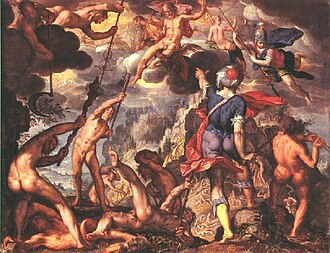
This divine conflict, known as the Titanomachy, reshaped the cosmos: lightning and stone clashed, mountains shook, and even the sky itself seemed to hang in the balance. When the Olympians emerged victorious, a new era began: one ruled by the familiar gods of Mount Olympus, with all their vivid personalities, rivalries, and imperfections.
The Olympians
The Olympians are the children of the Titans, and the most famous names in Greek mythology.
*Hades is not technically an Olympian, as he spent all of his time in the Underworld.
And from the age of the gods came the Age of Heroes, where mortals such as Heracles, Perseus, and Odysseus walked the line between the divine and the human. Their stories explored courage, failure, cleverness, temptation, grief, and triumph, mirroring the struggles of real people in a world where the favour or anger of the gods felt very close.
The Birth of Zeus: On Crete
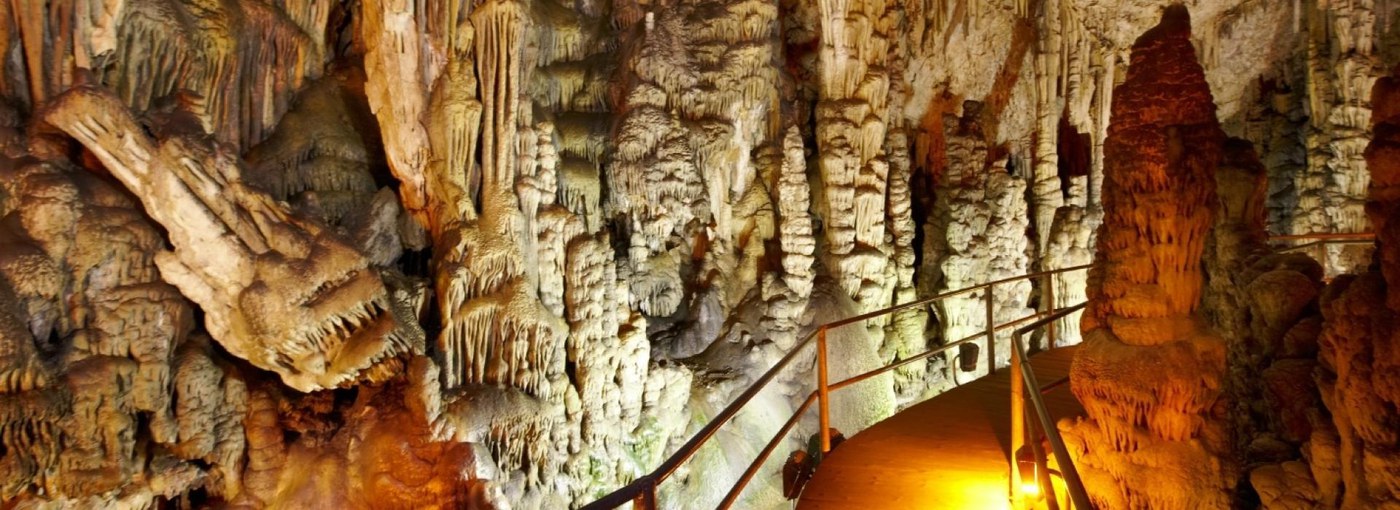
Crete holds a central place in Greek mythology as the birthplace of Zeus, a narrative that intertwines myth, ritual, and the island's prehistoric significance. According to tradition, Zeus was the youngest child of Kronos and Rhea, a generation of gods embroiled in cycles of power and violence. Kronos, fearing that one of his children would overthrow him as he had overthrown his own father Ouranos, swallowed each of his children at birth. To save Zeus, Rhea secretly delivered him in a cave on Crete, most commonly identified as either the Idaean Cave on Mount Ida or the Dictaean Cave on Mount Dikte, hiding him from his father until he was old enough to challenge him.
From a historian's perspective, this myth may encode ritual practices and social memory from the Minoan and early Mycenaean periods. Caves in Crete were often used for religious ceremonies, votive offerings, and cult activity, many dedicated to fertility, earth, or chthonic deities associated with protection and the continuity of life.
The concealment of Zeus in a cave reflects not only the narrative need for secrecy, but may also echo actual sacred spaces where young deities or initiates were "hidden" or ritually nurtured. Some scholars argue the myth preserves a memory of Crete as a ritual centre, where early Bronze Age societies practiced rites that later became integrated into the Olympian narrative.
Zeus' upbringing on Crete often includes the detail that he was nursed by the goat Amalthea and guarded by the Kouretes, armoured dancers who clashed their weapons to drown out his cries. Read symbolically, it emphasises Crete as a protective cradle for the future ruler of the gods, linking the island's rugged mountains, caves, and pastoral economy with themes of nurturing, secrecy, and divine intervention.
The myth of Zeus' birth situates Crete as a foundational site in Greek cultural memory: an island of strategic, spiritual, and symbolic importance, where divine power, ritual practice, and early civilisation converge, later influencing the political, religious, and mythological imagination of all of Greece. Which is to say: we picked a good island.
The Birth of Aphrodite
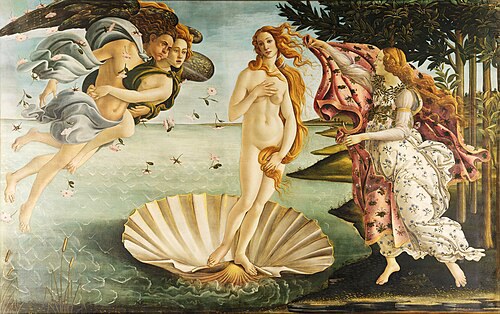
In Hesiod's telling, Aphrodite's origin is stranger and older than the Olympian family tree suggests. When the Titan Kronos castrated his father Ouranos, the primordial Sky, and cast the severed remains into the sea, the churning foam gathered around them and gave rise to a fully grown goddess: Aphrodite, whose name is traditionally linked to the Greek word for sea-foam, "aphros." She stepped ashore on a scallop shell, the very scene Botticelli would paint some two thousand years later.
It's a violent origin for the goddess of love and beauty, and later writers softened it considerably. Homer, for instance, simply calls her a daughter of Zeus. But the older, stranger version persisted alongside the newer one, a reminder that Greek myth rarely settles on a single truth. Even the gods, it turns out, get more than one origin story.
Book Recommendations
If you'd like to read your way to Crete, here's where we'd start.